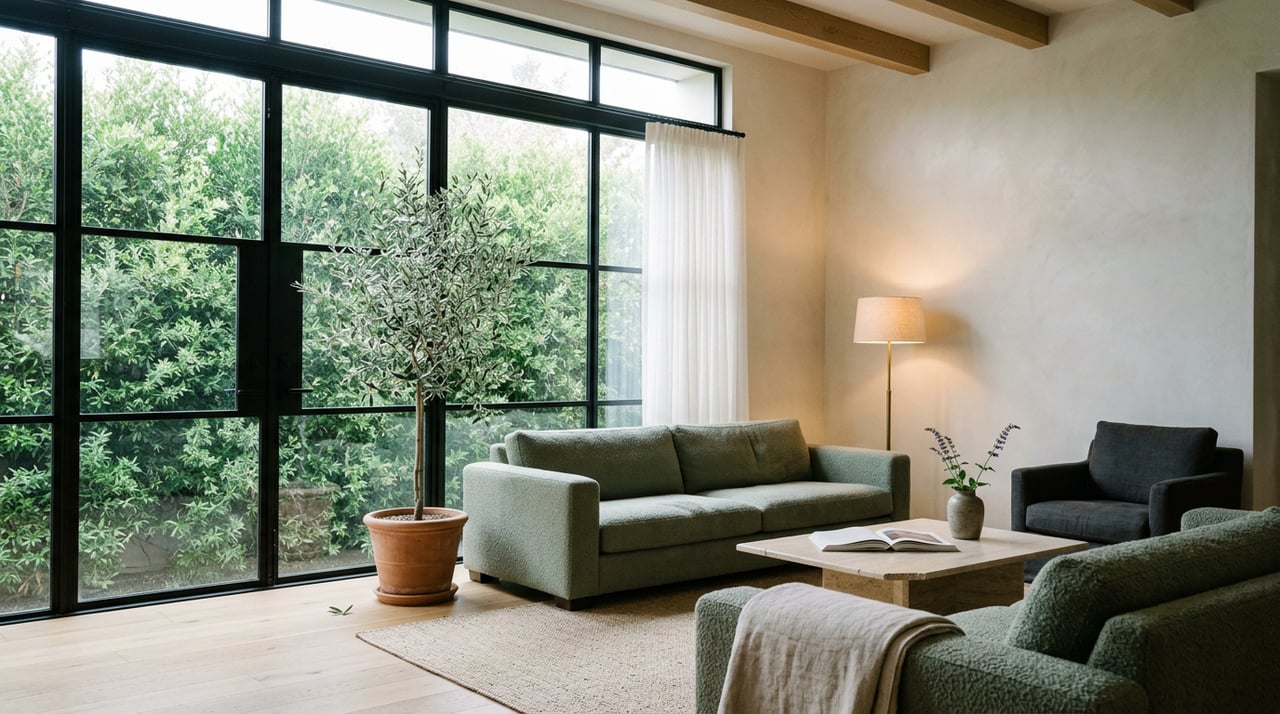
Two houses. Same block. Same square footage. One sold last spring for $3.5M and the other for $2.8M. The difference wasn't the kitchen or the roof. It was which side of a school attendance boundary the front door happened to sit on.
That is the piece of the Cupertino market that a median price will never tell you. Buyers who study portals for months before their first showing tend to arrive with a number in their head. Then they learn the number is only the beginning of the question.
Start With the Friction, Not the Median
Before we talk about price, talk about what catches buyers between offer acceptance and close. In Cupertino, the single most expensive assumption is that a Cupertino mailing address guarantees a specific school assignment. It does not. Most of the city feeds into Cupertino Union School District for K–8 and Fremont Union High School District for 9–12, but the northeast corner is served by Santa Clara Unified instead, and attendance areas do not line up with city limits or ZIP codes.
Listing platforms show school boundaries as a reference layer, not a legal one. FUHSD is explicit that students must reside full-time inside district boundaries, and the enrollment office actively investigates residency claims. If schools are the reason a family is stretching to buy in Cupertino, address-level verification with the district belongs in the offer process, not the escrow process. Waiting until closing to discover that the home you bought for the Monta Vista boundary actually feeds Homestead is the kind of surprise that rewrites a life plan.
There is a second piece of transaction friction unique to this market. Homes here routinely sell inside a week. Redfin data for the three months ending May 2026 shows homes averaging around 10 days on market and receiving roughly four offers each. Houzeo's March 2026 snapshot puts the sale-to-list ratio at 108 percent, with 87.5 percent of homes closing above ask. A buyer who wants to run standard inspection timelines, and a seller who thinks a longer marketing window will bring a better number, are both fighting the tempo of the market. Preparation before the offer is where deals are won here.
The Line That Sets the Price
Cupertino is served by five FUHSD high schools: Cupertino, Fremont, Homestead, Lynbrook, and Monta Vista. Underneath them sit CUSD elementaries and middle schools with their own attendance maps, so a home's full school path is a chain of three catchments, not one.
The pricing consequence is measurable at the street level. Independent market reporting on the Lynbrook attendance area shows single-family entry points in nearby San Jose starting around $2.3M, while Monta Vista-zoned homes typically run $3.0M–$3.5M, with Homestead and Cupertino High sitting between. That is not a five-mile pricing gradient. It is a boundary-line gradient, sometimes literally one side of a street versus the other.
For a family buyer, the practical translation is that the search should start with the assignment map, not the listing map. The elementary-to-middle-to-high feeder chains matter because they compound: Faria to Kennedy to Monta Vista, Meyerholz or Sedgwick to Kennedy to Monta Vista, Eaton to Miller to Lynbrook, Sedgwick or Lincoln to Lawson to Cupertino High, Lincoln to Lawson to Homestead. Two similar homes half a mile apart can land on different feeder chains, and the resale market prices that difference directly.
None of this is a comment on the quality of any school. It is a comment on how demand concentrates. Understanding where that concentration begins and ends is the difference between paying a premium you meant to pay and paying one you didn't see coming.
Two Markets Living Inside One Median
Every headline about Cupertino cites a single median. The MLSListings market summary for June 2026 shows why that number hides more than it reveals.
| Segment | Median Sale Price | Median $/Sq Ft | Median Days on Market | Months of Inventory |
|---|---|---|---|---|
| Single-family homes | $3,350,000 | $1,539 | 14 | 1.7 |
| Condos and townhomes | $1,310,000 | $1,009 | 36 | Higher |
Single-family and attached housing are not two ends of one market. They are two different markets with different buyers, different pace, and different competitive dynamics. Detached homes turn in about two weeks, with a sale-to-list ratio above 104 percent. Attached homes take more than a month, and one respected local market report noted that the share of Cupertino condo and townhome listings with price reductions ran around 41 percent this spring, above the roughly 30 percent national average.
The school-boundary premium sits almost entirely on the single-family side. Land, permanence, and the fact that families planning a full K–12 stay tend to buy detached all reinforce that split. A buyer who accepts the citywide median at face value and shops condos with a single-family mental model will feel like the market is soft. A buyer doing the reverse will feel like the market is impossible. Both are misreading the same number.
What The Rise Actually Changes
The other reason the median can mislead is that Cupertino has been an almost-closed system for new inventory. Single-family supply at any given moment often measures in the dozens. That is about to shift, though not immediately.
The Rise, the redevelopment of the former Vallco Mall site at Stevens Creek Boulevard and Wolfe Road, is scheduled to begin vertical construction in 2026 on a 50-acre site, with first move-ins targeted for around 2028. When fully built, the master plan calls for approximately 2,669 homes across the site. The first livable phase, Town Square West, has had a construction permit application submitted for 232 affordable family rental homes, and the broader early phase is planned to include 744 market-rate rentals and 393 for-sale homes alongside retail and open space.
For a buyer weighing a Cupertino purchase this year, three points matter more than the headline unit count. First, the delivery timeline means resale inventory drives the market for at least the next two years. Second, the for-sale share is a small fraction of the total, so the school-boundary premium on existing single-family stock is not going to be diluted by a wave of comparable detached product. Third, the project's location falls into specific existing attendance areas, so the boundary lens applies to Rise units too. New construction does not neutralize the map. It joins it.
Sellers should think about The Rise differently. The relevant risk is not price competition in 2028. It is buyer psychology now: some purchasers will hesitate, wondering whether waiting improves their options. The counter is that any home already inside a preferred boundary is not really competing with a mixed-use unit two miles away. Positioning your listing against the right comp set matters more than reacting to a headline.
Reading the Current Data Through the Boundary Lens
Different sources reported different Cupertino medians for the same window this spring. Redfin's three-month figure ending May 2026 landed around $3.2M. MLSListings' June 2026 single-family median came in at $3.35M. Zillow's home-value index sat near $3.1M. Movoto reported a June 2026 all-homes median around $2.4M with days on market above 60. Those numbers are not contradictory. They are measuring different mixes: all sales versus single-family only, closed sales versus a rolling index, and different geographic definitions of Cupertino.
The takeaway for a buyer is that no single median is diagnostic. The diagnostic questions are which segment, which boundary, and what the sale-to-list pattern looks like on that specific block over the last six months. That is the level at which offers get written and won here.
Short FAQ
Does a Cupertino address guarantee CUSD and FUHSD schools? No. The northeast corner of the city is served by Santa Clara Unified, and attendance areas do not follow city limits or ZIP code lines. Verify with the district before writing an offer.
Are condos a shortcut into the school boundary? Sometimes, but the price relationship is different. Attached homes carry less of the boundary premium than detached, in part because turnover patterns and buyer profiles are different, and the resale math reflects that.
Will The Rise soften prices before 2028? Not through direct supply. Vertical construction is starting this year and initial occupancy is targeted for around 2028. Any short-term effect is more about buyer sentiment than actual inventory.
Why do different sources publish different medians? Because they measure different property mixes, timeframes, and geographies. Pull the segment-specific number that matches the home you're actually shopping, not the citywide headline.
Working the Real Market, Not the Median
Cupertino rewards buyers and sellers who look past the headline number and price the specific attributes that drive value here: the school boundary, the feeder chain, the segment, and the timing. That work is what a good agent should be doing alongside you, in writing, before the offer.
If you're weighing a purchase or sale in Cupertino this year and want an honest read on what your budget actually reaches in the boundary and segment you care about, Team NL Homes is here to walk through it with you. Schedule a consultation and we'll map your options together.