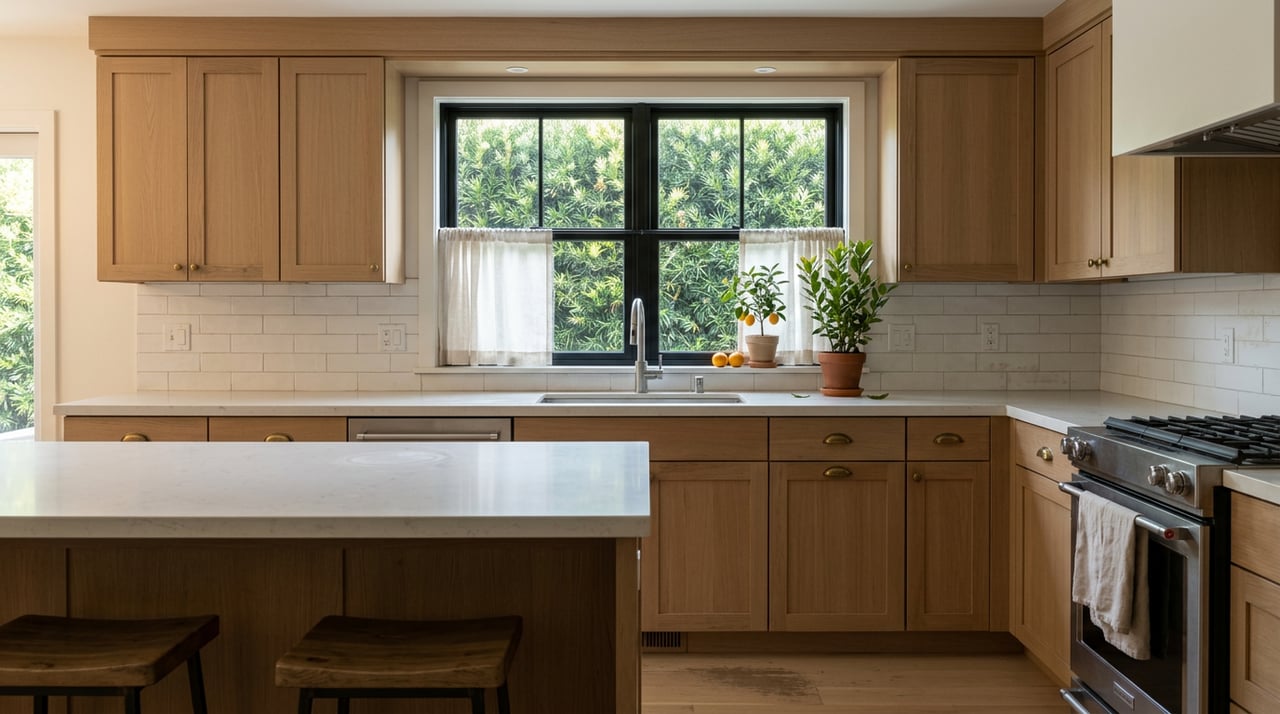
A house in Sunnyvale went into escrow at its list price, like thousands of other Bay Area homes do every month. Nothing about the accepted offer looked unusual. Then the file moved to a probate confirmation hearing, and by the time the gavel came down, the home had sold for $645,000 above that original number.
That is not a bidding war in the way most Bay Area sellers think of one. No open house crowd, no escalation clause, no buyer agent refreshing a portal at midnight. It was a courtroom auction, built into California probate law, and it can happen to any estate sale in Santa Clara County where the personal representative was not given full authority to sell without the court's blessing. If you have just been named executor or administrator of a San Jose home and someone has told you "the accepted offer is the deal," that is only true for some estates. For others, the accepted offer is closer to a floor than a ceiling.
The Fork in the Road Nobody Explains at the First Meeting
Every California probate estate that includes real property gets sorted into one of two lanes early, usually in the petition that asks the court to appoint a personal representative in the first place. The lane is called the Independent Administration of Estates Act, or IAEA, and it comes in two versions.
Full authority lets the personal representative list the home, accept an offer, and close escrow the way any seller would, without asking a judge to approve the sale. The only real guardrail is a Notice of Proposed Action sent to heirs and beneficiaries, who then have a window to object before the sale can proceed. If nobody objects, escrow closes and the case moves on.
Limited authority is a different animal. The representative can still market and negotiate, but the accepted offer has to survive a court confirmation hearing before it becomes final, and that hearing includes an open floor for higher bids.
Which lane an estate lands in is decided by the will's language, the court's assessment of the estate, and sometimes negotiation among heirs, often before anyone involved has thought hard about what it means for a home sale six months later.
| Full IAEA Authority | Limited IAEA Authority | |
|---|---|---|
| Court confirmation hearing required | No, unless someone formally objects | Yes, always |
| Safeguard for heirs | 15-day Notice of Proposed Action, objection window | Public confirmation hearing with court oversight |
| Minimum accepted price | No statutory floor | At least 90% of the probate referee's appraised value |
| Can a stranger outbid the accepted offer | No | Yes, under the statutory overbid formula |
| Typical path to close once an offer is accepted | Similar to a standard sale | Additional weeks to months for hearing scheduling |
Why Santa Clara County Sees This Constantly
This is not an edge case in the South Bay. Santa Clara County recorded 1,802 estate and trust probate filings in fiscal year 2024 to 2025, the sixth-highest total of any California county, according to the Judicial Council of California's 2026 Court Statistics Report. Add conservatorship and guardianship matters and the county's Probate Division took in nearly 2,700 filings that year, roughly 4 percent of the state's entire probate caseload.
Part of the reason is baked into local property values. California allows a simplified small estate process for estates under $184,500, using an affidavit instead of full probate. In most of the country that threshold covers a meaningful share of estates. In Santa Clara County, where a single-family home routinely exceeds that number on its own, most estates that include a house end up in formal probate whether the family expected it or not.
That means the fork in the road above is not a rare complication. It is the normal path for a large share of homes changing hands after a death in this county, and it is decided at the Downtown Superior Courthouse at 191 North First Street in San Jose, which also handles the confirmation hearings themselves.
What Actually Happens in the Room
For estates with limited authority, the confirmation hearing is where the accepted offer either becomes final or gets overtaken. California's statutory overbid formula sets the minimum increase any challenger has to clear: 10 percent more on the first $10,000 of the original offer, and 5 percent more on everything above that, under Probate Code Section 10311.
Run that math on a $1,200,000 accepted offer and the minimum qualifying overbid comes out to roughly $1,260,500. Anyone showing up to challenge that offer needs a cashier's check for at least 10 percent of their bid in hand at the hearing. If more than one challenger appears, the bidding continues live until no one raises again, and the court confirms the sale to whoever is left standing.
That is the mechanism behind the Sunnyvale outcome. It is also why probate listings that require confirmation tend to stay actively marketed even after an offer is accepted. A representative who stops showing the home once escrow opens can leave real money on the table if the estate has limited authority, since every additional showing is a chance at a qualifying overbid the family benefits from.
A few signals tend to show up together when an estate is headed toward this kind of hearing rather than a quiet close:
- The listing agent's private remarks mention a confirmation hearing date instead of a standard closing timeline
- The accepted offer includes probate-specific contract language rather than the standard purchase agreement
- The personal representative's attorney has filed a petition for confirmation within roughly 30 days of the accepted offer, attaching the contract, per Santa Clara County's local probate rules
- The property was appraised by a court-appointed probate referee, not just a buyer's lender
What This Means If You're Trying to Close on a Timeline
San Jose's resale market has been moving fast this year. Over the three months ending June 2026, homes across the city sold in a median of 15 days, and the broader market has continued to favor sellers through the summer. None of that speed applies to a limited-authority probate sale in the same way.
A confirmation hearing has to be scheduled on the court's calendar, and Santa Clara County's probate division has been running with real backlogs through 2026, so the gap between an accepted offer and a confirmed sale is measured in weeks to months, not days, regardless of how quickly the house next door closed. Families expecting a probate sale to move at the pace of the surrounding market are often the ones most caught off guard by the wait.
This is exactly where the choice of authority matters most in practice. Full authority, when the will and the court allow it, lets a San Jose probate sale behave much closer to a conventional listing, riding the same 15-day pace as everything else on the market. Limited authority trades that speed for the possibility of a materially higher final price, since the hearing itself functions as a built-in second round of competition the estate does not have to pay a marketing budget to generate.
Neither path is automatically better. A family that needs to settle an estate and move on may prefer the certainty of full authority. A family focused on maximizing what beneficiaries receive may come out ahead accepting the slower, more public route. The point is that this is a real choice with real tradeoffs, not a formality to get through as fast as possible.
A Short FAQ
How do we find out which authority our estate has? It is stated in the court order appointing the personal representative, often referred to as Letters. If that order does not spell it out clearly, the probate attorney handling the case can confirm it before a listing goes live.
Can beneficiaries object to an overbid happening at all? Beneficiaries can raise objections to the sale price, the marketing effort, or the confirmation process itself, but the overbid mechanism is set by state law for limited-authority sales and applies regardless of individual preference once a hearing is scheduled.
What if nobody shows up to overbid? Then the court simply confirms the original accepted offer and the sale proceeds to closing on largely the same terms as a standard transaction, just with the added time the hearing required.
Does a fast resale market help a probate sale close sooner? It can shorten the time an offer takes to arrive, but it does not shorten the court's calendar. The hearing date is set by the Probate Division, not by how many buyers are circling the listing.
If you are stepping into the role of executor, administrator, or trustee for a San Jose property and you are not yet sure which lane your estate falls into, that is the first thing worth getting a straight answer on before a listing goes anywhere. Team NL Homes works with families through exactly this kind of transition across Santa Clara County, coordinating with probate attorneys where needed so the sale strategy matches the authority the court has actually granted. Schedule a consultation and bring your court paperwork. It is usually the fastest way to know what you are really working with.